

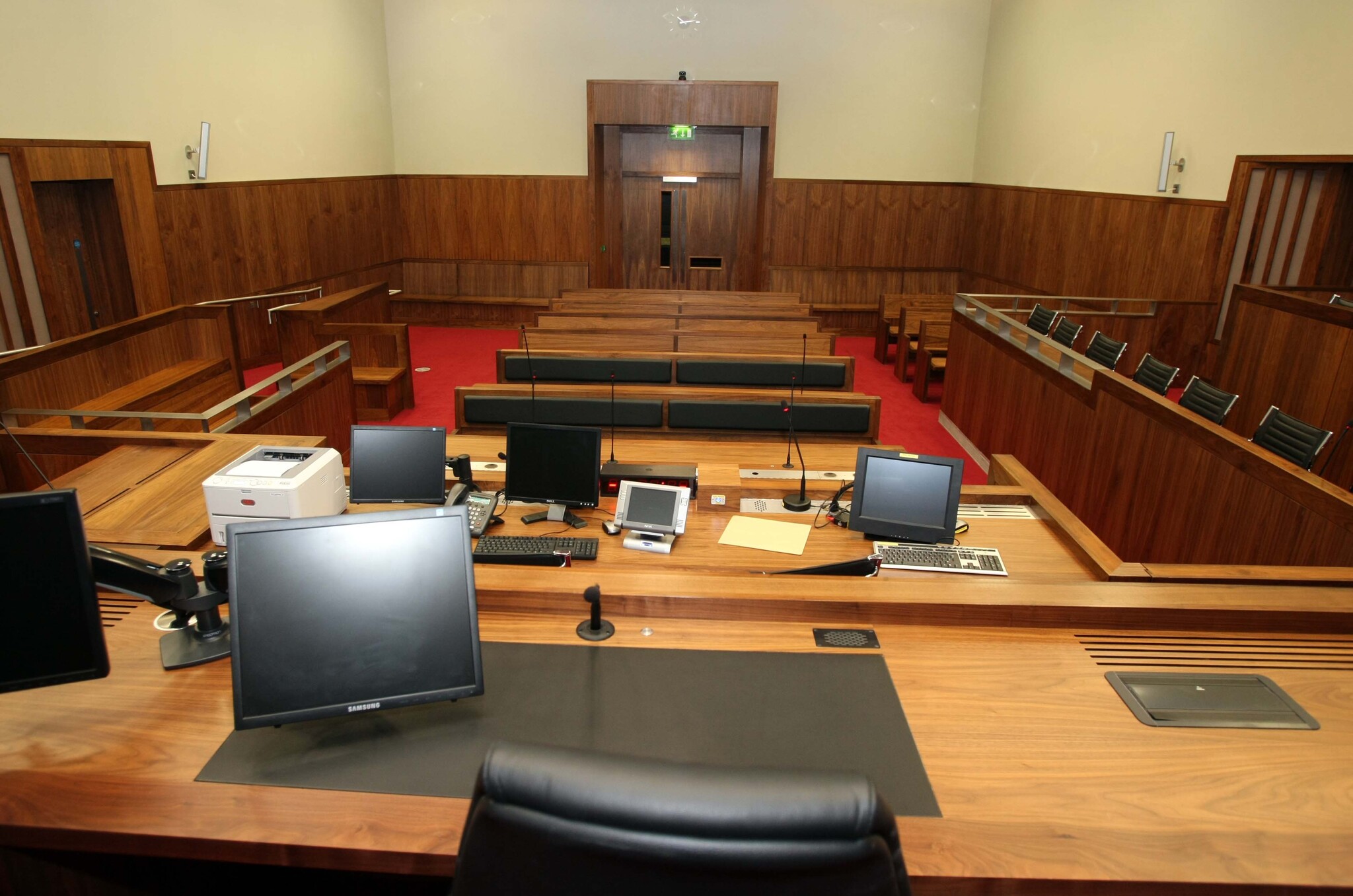
A man who entered the ladies toilet in a Dublin pub and put his phone into an occupied cubicle has had his conviction for threatening and abusive behaviour replaced with a probation bond on appeal.
Judge Ronan Munro commended the injured party for confronting the man in the bathroom, saying that she was “making Ireland a safer place” by her decisive actions.
Martin Snee (58), with an address in Blackrock, Dublin was convicted in the District Court of engaging in threatening, abusive or insulting behaviour with intent to provoke a breach of the peace at a pub in Ballsbridge, Dublin, contrary to section 6 of the Criminal Justice (Public Order) Act, 1994.
He was sentenced to six weeks imprisonment with two weeks suspended and ordered to pay €1,000 in compensation to the injured party. He later lodged an appeal against the severity of his sentence.
Garda Robert Whelan told the District Court Appeals Court on Tuesday that on April 22, 2018, he got a report that a man had entered a female toilet at a pub in Ballsbridge.
He said that he encountered the man a short distance away and brought him to a garda station, where he was charged with a public order offence.
Garda Whelan said that he returned to the pub and heard that a woman was using the toilet when she heard a ‘click’ sound. He said that the woman looked up and observed a mobile phone with a camera facing into her cubicle.
Garda Whelan said that the woman exited and waited until a man left the next cubicle. The witness said that the man was confronted by a number of staff but made an escape.
He said that he watched CCTV footage, which showed a man enter the male toilets only to exit and enter the ladies.
Garda Whelan said that the phone in question was examined but no photos from the pub were found.
The injured party told the court that she had attended the pub to watch the rugby with her husband. She said that she entered the bathroom, saw that the middle cubicle was occupied and that she never imagined what would happen.
She said that she finds it very upsetting to walk past the pub and that she had trouble sleeping, reliving the incident over and over in her head.
The injured party said that she did not realise the impact the offence would have even seven years later and that it affected her confidence greatly.
She said that she hated coming to court “over and over again” and having to see the defendant.
The woman said that she does not think Snee realises the impact his actions had on her.
Judge Munro said that the woman did a “great job” and acted decisively to get Snee arrested, which he commended.
Defence counsel for Snee, Seosaimhín Ní Chathasaigh BL, said that her client does acknowledge the distressing impact of his actions.
She told the court that her client is suffering from a mental disorder and was “unable to refrain” from committing the act, though he “knew it was wrong”. She said his remorse is genuine and deeply felt.
Ms Ní Chathasaigh said that Snee is known as a polite and introverted man and the incident was the result of a “perfect storm of psychological pressure”.
Counsel said that Snee has “crippling” obsessive compulsive disorder and that his actions did not come as a result of lust or malice on his part. She said that he did not have a predatory intent but that these actions come from a troubled mental state.
Ms Ní Chathasaigh said that Snee has made persistent efforts to address his behaviour by seeking help and counselling.
Judge Ronan Munro said that there was a “disturbing” and “alarming” aspect to the case. He said that the woman was “not lacking in courage” for confronting Snee.
Judge Munro noted however that Snee was not charged with a sexual offence. He said that Snee has accepted liability in this court.
The judge said that he would impose a fine but that it should be directed to the injured party to apply as she feels fit, adding that it was not compensation.
Judge Munro said he took into account the fact that Snee has not repeated this kind of behaviour in the seven years since the incident.
He told Snee he was prepared to give him the benefit of the doubt. Snee responded that he appreciated it was “unacceptable” and that it is something he battles every day.
Addressing the injured party, Judge Munro commended her for her decisive action, saying she was “making Ireland a safer place” by her actions and that this would protect people in the future.
He said that the “people of Ireland have you to thank” and that the court recognises that.
The judge decided to discharge Snee under section 1(2) of the Probation of Offenders Act, 1907. He made the conditions that Snee must enter a probation bond for a period of three years and pay €1,000 to a garda station to be sent to the injured party.
He said that Snee must stay away from the injured party and must stay away from the pub where the incident occurred.
The judge also made the condition that Snee was not to carry a phone or camera capable of taking pictures or videos. He said Snee must continue to attend a psychologist and OCD support and facilitate the supervision of these terms by the gardai.